For patients considering same-day dental implants, choosing an experienced implant dentist is an important part of the treatment process. At Texas Implant & Dental Center, implant treatment is led by Dr. Clark Damon, a Fort Worth and Dallas dentist and implant specialist who has owned the Fort Worth office since 2013. His approach to dentistry focuses on conservative treatment and patient comfort, including the use of IV sedation when appropriate.
Dr. Damon has extensive experience in implant dentistry and is one of the busiest All-on-4 implant providers in Texas, placing more than 1,400 implants annually and completing approximately 25 All-on-4 dental implant cases each month. His training includes an advanced General Practice Residency at the Michael E. DeBakey Veterans Affairs Hospital in Houston.
His expertise also extends to advanced implant procedures and full-arch treatment concepts. Dr. Damon serves as an implant lecturer for the Texas Implant Institute and Neodent and has lectured for Nobel Biocare on topics including the All-on-4 treatment concept, advanced implants such as zygomatic and pterygoid implants, All-on-6 treatment and cadaver-based implant courses. He is also Co-Director of the Texas Implant Institute, where he and Dr. Rick Kline has taught more than 300 clinicians how to perform permanent dental implant procedures on cadavers.
Dental implants are often associated with a treatment process that takes several months. However, advances in implant dentistry have made it possible for some patients to receive an implant or temporary replacement teeth in a much shorter timeframe. This has led to growing interest in same-day dental implants and what the treatment actually involves.
For patients considering Dental implants in Amarillo, Texas, understanding the difference between same-day implant placement and completing the entire implant process in one day is important. Same-day treatment does not necessarily mean that a permanent tooth is placed and fully healed within 24 hours.
Texas Implant & Dental Center provides implant-focused dental care for patients who need tooth replacement solutions. Understanding your oral health, bone structure, existing teeth and treatment requirements can help determine whether an implant-based solution may be appropriate.
This guide explains how same-day dental implants work, who may be a candidate, what recovery involves and how implants compare with traditional dentures and full mouth dental implants.
What Are Same-Day Dental Implants
Same-day dental implants refer to treatment approaches in which an implant is placed during the same appointment as another planned procedure, such as tooth extraction. In certain cases, a temporary crown or replacement tooth may also be attached on the same day.
The term can sometimes create confusion because an implant placed on day one still needs time to integrate with the jawbone. This biological process, known as osseointegration, is essential for creating a stable foundation for the final restoration.
Therefore, same-day treatment usually refers to the speed of the initial procedure or temporary restoration rather than complete implant treatment from start to finish in a single day.
How Same-Day Implant Treatment Works
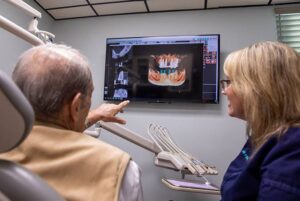
The process begins with an examination and diagnostic evaluation. Your dentist may use digital imaging or other diagnostic tools to assess the teeth, gums and jawbone.
If an extraction is required, the damaged tooth may be removed and an implant placed during the same visit when the surrounding bone and other conditions are suitable. A temporary restoration may then be provided so the patient does not necessarily have to spend an extended period without a tooth.
The implant generally remains beneath the gum or supports a temporary restoration while the jawbone heals around it. Once integration is sufficiently advanced, the temporary restoration can be replaced with a permanent crown, bridge or other implant-supported restoration.
Can Everyone Get Dental Implants in One Day
Not every patient is automatically suitable for same-day dental implant treatment. Several factors influence whether immediate implant placement is appropriate.
The condition of the jawbone is particularly important. An implant requires sufficient bone volume and density to remain stable while healing. Significant bone loss may require additional treatment before implant placement can take place.
The health of the gums also matters. Active gum disease can affect the tissues surrounding an implant and may need to be treated before implant surgery.
Your dentist will also consider the condition of the tooth being replaced, your bite, the location of the implant and your overall oral health. A detailed examination is necessary before determining whether immediate treatment is appropriate.
Why an Examination Matters
A consultation allows the dental team to evaluate the factors that cannot be determined simply by looking at a missing or damaged tooth.
Imaging can help identify the position of important anatomical structures and provide information about the available bone. Your dentist can then determine whether immediate placement is reasonable or whether a staged approach would provide a more predictable result.
For this reason, patients should be cautious about assuming that every dental implant can be completed on the same day.
What Happens During Same-Day Dental Implant Treatment
The exact process varies depending on the patient’s condition and the number of teeth being treated. However, a typical treatment pathway may begin with a consultation and diagnostic imaging.
If the tooth is still present but cannot be saved, extraction may be performed. In suitable cases, the implant can then be positioned in the extraction site.
A temporary restoration may be attached if the implant has sufficient initial stability and the treatment plan allows for it. The temporary tooth is designed to provide a functional and aesthetic solution while the implant continues to heal.
During the healing period, patients may receive specific instructions regarding oral hygiene, diet and activities that could place unnecessary pressure on the implant.
The permanent restoration is generally fitted after the implant has had enough time to integrate with the surrounding bone.
How Long Does Dental Implant Healing Take
The healing period varies between patients. Osseointegration can take several months, depending on factors such as implant location, bone quality and the individual’s healing response.
This is why the phrase “same-day dental implants” should not be interpreted as meaning that the implant is completely healed within one day.
The initial procedure may be completed quickly, but the biological healing process continues afterward. Your dentist will monitor the implant and determine when it is ready for the final restoration.
Same-Day Implants vs Dentures
Dentures and dental implants are different approaches to replacing missing teeth. Dentures are removable appliances that can replace several teeth or an entire arch, while implants are positioned into the jawbone and can support individual crowns, bridges or implant-supported dentures.
Traditional dentures do not require surgical placement into the jawbone. They can therefore be an option for patients who are not candidates for implants or who prefer a removable tooth replacement.
Implant-supported solutions, on the other hand, can provide greater anchorage because the implant is connected to the jawbone. The appropriate option depends on factors such as the number of missing teeth, bone condition, oral health and the patient’s treatment goals.
A dental consultation can help compare these options based on your specific circumstances rather than relying on a general recommendation.
What Are Full Mouth Dental Implants
Patients who have lost most or all of their teeth may require a different treatment approach from someone replacing a single tooth. Full mouth dental implants are designed to restore an entire arch or both arches using strategically placed implants to support a fixed or removable restoration.
Despite the name, full mouth implant treatment does not necessarily mean placing one implant for every missing tooth. The number and positioning of implants depend on the treatment plan, available bone and the type of restoration being used.
For patients with extensive tooth loss, full mouth implant treatment may provide an alternative to conventional removable dentures. However, it involves careful planning and cannot always be completed entirely in one day.
Is Full Mouth Treatment Possible in a Day
In some cases, patients may receive implants and a temporary full-arch restoration during a single treatment period. This is sometimes described as “teeth in a day.”
However, the permanent restoration and biological healing process still require additional time. The temporary teeth allow the patient to have a replacement while the implants integrate with the bone.
Whether this approach is appropriate depends on factors such as bone quality, implant stability, gum health and the patient’s overall treatment needs.
Dental Implants in Amarillo, Texas
Patients researching Dental implants in Amarillo, Texas may encounter different treatment options depending on their individual dental needs. Implant treatment can range from replacing one missing tooth to restoring an entire arch.
The first step is understanding what type of tooth replacement is required. A single implant, implant-supported bridge, implant-supported denture or full-arch restoration may each involve different procedures and timelines.
Texas Implant & Dental Center can evaluate the condition of your teeth, gums and supporting bone as part of the treatment planning process. Patients should discuss their concerns, existing dental work and expectations during the consultation so the treatment plan can be based on their individual needs.
Dental Implants in Fort Worth, Texas
Patients also researching Dental implants in Fort Worth, Texas should understand that implant treatment is not a one-size-fits-all procedure. The same-day approach that may be suitable for one patient may not be recommended for another.
Factors such as previous extractions, bone loss, gum health and the number of teeth being replaced can affect the treatment sequence.
A comprehensive evaluation can help determine whether immediate implant placement is possible or whether preliminary treatment is needed. This approach allows the dental team to focus on the long-term stability and health of the implant rather than simply completing the procedure as quickly as possible.
What Can Prevent Same-Day Implant Placement
Several circumstances may make immediate implant placement unsuitable. Significant bone loss is one common consideration because the implant needs sufficient support.
Untreated gum disease can also affect implant treatment. In some cases, infection or inflammation around the tooth may influence whether immediate placement is advisable.
A complex bite or insufficient space may also require additional planning. Some patients may benefit from bone grafting before an implant can be placed.
These situations do not necessarily mean that dental implants are impossible. They may simply mean that treatment needs to be completed in stages.
What Should You Expect After the Procedure
Some discomfort, swelling or tenderness can occur after implant surgery. Your dental team can provide specific aftercare instructions based on the procedure performed.
Patients should follow instructions regarding cleaning the area and eating during the early healing period. Avoiding unnecessary pressure on the implant can also be important, particularly when a temporary restoration has been placed.
Follow-up appointments allow the dental team to assess healing and determine whether the implant is progressing as expected.
It is important to remember that feeling comfortable after the procedure does not necessarily mean the implant has completely integrated with the bone. The healing process continues even when symptoms have subsided.
Is Same-Day Dental Implant Treatment Right for You
The best way to determine whether same-day implant treatment is suitable is through a professional examination. Your dentist can assess your tooth or teeth, jawbone, gums and bite before recommending a treatment approach.
Patients should also ask what “same-day” means in their proposed treatment. It may refer to implant placement, temporary teeth or a combination of procedures, rather than the completion of the entire treatment.
Understanding the complete timeline can help you make an informed decision and set realistic expectations for healing and final restoration.
How to Prepare for a Dental Implant Consultation
Before your consultation, consider what you want to accomplish with treatment. You may want to replace one missing tooth, improve the stability of removable dentures or explore options for replacing multiple teeth.
It can also be helpful to discuss previous dental procedures, existing restorations and any concerns about treatment time.
During the consultation, ask how long each stage is expected to take, whether a temporary restoration will be provided and what factors could change the treatment plan.
If you are considering treatment at Texas Implant & Dental Center, you can schedule an appointment to discuss your individual dental implant needs and determine which treatment options may be appropriate.
Conclusion
Same-day dental implants can shorten the initial treatment process for appropriately selected patients, but they do not eliminate the natural healing period required for an implant to integrate with the jawbone. The term generally refers to implant placement and, in some cases, a temporary restoration provided during the same treatment period.
Whether you are considering a single implant, full mouth dental implants or an alternative such as dentures, a detailed dental evaluation is the best way to understand your options. Patients looking into Dental implants in Amarillo, Texas or Dental implants in Fort Worth, Texas should discuss the complete treatment timeline, healing requirements and restoration options before beginning treatment.