Choosing how to replace missing teeth involves more than deciding between different types of restorations. Dental implants can provide a stable foundation for replacement teeth, but not everyone is an immediate candidate. Your oral health, jawbone condition, overall health, and treatment goals all play a role in determining whether implants are appropriate.
At Texas Implant & Dental Cente, Dr. Clark Damon provides dental implant care in Fort Worth and Amarillo, Texas. His approach emphasizes conservative treatment planning and patient comfort. Dr. Damon completed an advanced General Practice Residency at the Michael E. DeBakey Veterans Affairs Hospital in Houston and has extensive experience with implant procedures, including All-on-Four treatment.
Understanding the factors involved can help you have a more informed conversation with an implant dentist before treatment begins.
What Does It Mean to Be a Good Dental Implant Candidate?
Dental implant candidacy is not based on one factor. A dentist or implant specialist evaluates the condition of your teeth, gums, jawbone, and general health before recommending treatment.
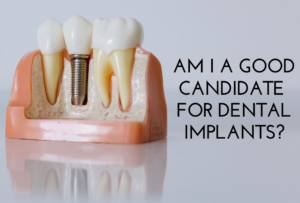
An implant replaces the root portion of a missing tooth. A small implant is placed into the jawbone, where it can integrate with the surrounding bone. A dental restoration is then attached to the implant to replace the visible portion of the tooth.
Because the implant depends on the surrounding tissues for support, the condition of your mouth matters. A detailed examination may include dental imaging, a review of your medical history, and an assessment of your current bite and remaining teeth.
1. You Have Enough Bone Support for an Implant
One of the most important considerations is the condition of the jawbone.
When a natural tooth is lost, the bone that previously supported its root may gradually change. The amount of bone available can therefore vary from one person to another. An implant dentist needs to determine whether the jaw has sufficient bone volume and density to support the planned implant.
Imaging can help the dental team evaluate the area before treatment. If bone volume is limited, additional procedures may sometimes be considered before or as part of implant treatment. However, whether such treatment is appropriate depends on the individual case.
This is why replacing a missing tooth is not simply a matter of placing an implant in an empty space. The location of the missing tooth, surrounding anatomy, and available bone all need to be considered during treatment planning.
Why Bone Health Matters
The implant needs a stable environment during healing. Adequate bone support can help provide the foundation needed for the implant to function as intended.
Patients considering Dental Implants in Amarillo can discuss their bone structure and treatment options with an implant specialist during an evaluation. A consultation can help determine whether an implant can be placed as planned or whether additional steps should be considered first.
2. Your Gums and Remaining Teeth Are Healthy Enough for Treatment
Healthy gums are another important part of implant planning.
Active gum disease can affect the tissues surrounding teeth and implants. For this reason, existing oral health concerns may need to be addressed before implant placement. Your dentist may evaluate gum health, remaining teeth, oral hygiene habits, and signs of infection before developing a treatment plan.
This consideration also applies to patients who have several missing teeth. The dentist needs to look at the overall condition of the mouth rather than evaluating only the space where an implant may eventually be placed.
Patients who currently wear traditional dentures may also have questions about whether implants could provide another option. Depending on their oral health and treatment goals, some may be evaluated for implant-supported restorations or Full Mouth Dental Implants.
Full-mouth treatment is more comprehensive than replacing one missing tooth. It requires careful planning around the patient’s existing teeth, bite, bone structure, and desired restoration.
Oral Hygiene Remains Important
Dental implants are not a replacement for oral hygiene. Even after implant treatment, maintaining the tissues around the restoration is important.
Brushing, cleaning between teeth, professional dental care, and following the dental team’s instructions can all form part of long-term implant maintenance.
3. Your Health and Treatment Goals Support Implant Treatment
A third consideration is your general health and whether your circumstances allow you to undergo the planned treatment and healing process.
Your dentist may ask about medications, existing health conditions, previous dental procedures, and other factors that could influence treatment. This information helps the dental team identify potential concerns and determine whether additional precautions are necessary.
Age alone does not automatically determine whether someone can receive dental implants. Instead, the focus is generally on overall health, oral condition, bone support, and the specific requirements of the proposed treatment.
Your treatment goals also matter. Someone missing a single tooth may need a different approach from someone who has lost most or all of their teeth. In some situations, traditional Dentures in Texas may be considered, while other patients may be evaluated for implant-supported solutions.
The right choice depends on the individual’s clinical situation rather than on a single treatment being appropriate for everyone.
How Dr. Clark Damon Approaches Implant Dentistry
Dr. Clark Damon is the dentist and implant specialist associated with Texas Implant & Dental Center. According to the practice’s information, he has owned the Fort Worth office since 2013 and has a particular focus on patient comfort and conservative treatment planning.
His training includes an advanced General Practice Residency at the Michael E. DeBakey Veterans Affairs Hospital in Houston. The practice also states that he lectures for the Texas Implant Institute and Neodent and has provided education on implant concepts including All-on-Four, All-on-Six, zygomatic and pterygoid implants, and related advanced techniques.
This background is relevant when considering implant treatment because complex cases may require detailed planning and an understanding of different implant approaches.
What Happens During an Implant Evaluation?
An implant consultation is an opportunity to determine whether dental implants are appropriate for your specific circumstances.
The dentist may review your dental history, examine your gums and remaining teeth, evaluate your bite, and use dental imaging to assess the jawbone. Your treatment goals can then be discussed alongside the clinical findings.
It is also an opportunity to ask questions about healing, restoration options, maintenance, and possible alternatives.
Rather than assuming that implants are the right answer, a proper evaluation should establish whether they are suitable for your mouth and what treatment approach may make sense.
When Implants May Not Be the First Option
Not every patient requires dental implants. Some people may have oral health conditions that should be treated first. Others may have insufficient bone support or health factors that require additional consideration.
In some cases, a conventional denture or another tooth-replacement option may be considered instead. Treatment decisions should be based on an individual’s examination, health history, anatomy, and goals.
If you are considering treatment, it is useful to compare the benefits, limitations, maintenance requirements, and expected process of each suitable option.