Missing teeth can affect everyday activities such as eating, speaking and smiling. When several or all teeth are missing, finding a reliable tooth replacement option becomes even more important. While traditional dentures have been used for many years, advances in implant dentistry have created additional options for people looking for greater stability and long-term tooth replacement.
Texas Implant & Dental Center provides dental implant and tooth replacement services for patients who are exploring solutions for missing or failing teeth. Depending on factors such as oral health, bone structure and treatment goals, patients may be able to consider options ranging from conventional dentures to implant-supported restorations and full-arch implant treatment.
Understanding how these treatments work, what the process involves and what factors influence candidacy can help patients make informed decisions.
What Are Full Mouth Dental Implants?
Full mouth dental implants are designed to replace most or all of the teeth in an upper or lower dental arch. Instead of using a removable appliance that rests primarily on the gums, dental implants are placed into the jawbone to support a fixed restoration.
A full-arch implant restoration generally involves three main components:
- Dental implants that act as artificial tooth roots
- Abutments that connect implants with the restoration
- A customised prosthetic arch that replaces the visible teeth
The number and placement of implants can vary according to the patient’s anatomy and the type of restoration being planned. A dental examination and appropriate imaging are therefore important before treatment.
Full mouth implant treatment can be particularly relevant for people who have extensive tooth loss or teeth that are severely damaged and unlikely to remain healthy long term.
Who May Consider Full-Arch Implant Treatment?
Not every patient with missing teeth will require the same treatment. A dental professional needs to evaluate the condition of the mouth before recommending implants.
Potential candidates may include people who:
- Have lost multiple teeth
- Have severely damaged or failing teeth
- Have difficulty eating because of missing teeth
- Experience problems with loose conventional dentures
- Want a fixed alternative to removable teeth
- Have adequate bone to support implants or may be suitable for additional treatment
Gum health is another important consideration. Active gum disease may need to be addressed before implant surgery because healthy supporting tissues are important for successful treatment.
Your overall health, medications, smoking habits and healing capacity may also influence whether implant treatment is appropriate.
How Dental Implants Work
A dental implant is placed into the jawbone and functions as an artificial tooth root. After placement, the surrounding bone can gradually integrate with the implant.
This process is called osseointegration. Once sufficient healing has occurred, the implant can provide a stable foundation for an artificial tooth or larger restoration.
For patients who need to replace only one or a few teeth, individual implants may be appropriate. Patients with extensive tooth loss may instead be evaluated for implant-supported bridges or full-arch restorations.
You can learn more about dental implants and the treatment options available for replacing missing or failing teeth.
Benefits of Implant-Supported Tooth Replacement
Dental implants are different from traditional removable dentures because they are anchored within the jawbone. This distinction can provide several potential benefits.
Greater Stability
Traditional dentures can sometimes shift while eating or speaking. Implant-supported restorations are anchored to implants, which can provide a more stable foundation.
Improved Chewing Function
Tooth loss can make it difficult to chew certain foods. A stable restoration may help restore chewing function, although the recovery process and final function vary between patients.
Natural-Looking Results
Implant restorations can be designed to resemble natural teeth. Factors such as tooth shape, size, colour and gum contours can be considered when creating the final restoration.
Support for the Jaw
After tooth loss, the jawbone can gradually lose volume because the natural tooth root is no longer providing stimulation. Implants are placed within the bone and can help maintain the bone around the implant site.
Fixed Tooth Replacement
For patients who are suitable candidates, a fixed implant-supported restoration can eliminate some of the concerns associated with removable teeth.
Dental Implants vs. Dentures
Both implants and dentures can replace missing teeth, but they have different designs and requirements.
Dentures are removable appliances that replace multiple missing teeth. Depending on the type, dentures may replace some or all of the teeth in an arch.
Conventional dentures generally rest on the gums, while implant-supported or snap-on dentures use dental implants to provide additional retention.
Full-arch fixed implant restorations are another option for eligible patients.
| Feature | Implant-Supported Restoration | Conventional Dentures |
| Removable | Usually fixed | Yes |
| Implant surgery | Required | Not required |
| Stability | Implant-supported | Relies on fit and oral anatomy |
| Jawbone stimulation | Provided by implants | Not provided by the denture itself |
| Cleaning | Requires specific implant care | Removed for cleaning |
| Suitability | Requires clinical assessment | May be suitable for a wider range of patients |
There is no single solution that is ideal for everyone. A dental professional can explain which option is appropriate based on individual circumstances.
What Happens During Implant Treatment?
The treatment process generally involves several stages.
Initial Consultation
The first step is an examination and consultation. The dentist reviews your dental and medical history and evaluates your existing teeth, gums and jawbone.
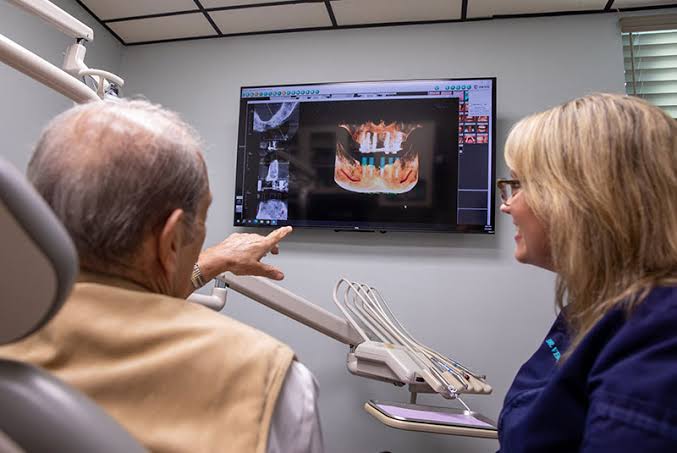
Imaging may be used to assess bone structure and identify anatomical considerations.
Treatment Planning
Once the examination is complete, the dental team develops a treatment plan based on your needs.
The plan may involve preserving some existing teeth, extracting teeth that cannot be restored or replacing an entire arch.
Implant Placement
During implant surgery, the implant posts are placed into carefully selected areas of the jawbone. The procedure and number of implants depend on the treatment plan.
Patients with significant bone loss may require additional evaluation to determine whether specialised implant techniques or preparatory procedures are appropriate.
Healing Period
The implants need time to integrate with the surrounding bone. Healing time varies according to the procedure and the individual patient.
Temporary teeth may be provided during the treatment period when appropriate.
Final Restoration
After the implants have healed sufficiently, the final restoration can be attached. The restoration is designed to provide an appropriate fit, function and appearance.
Can People With Bone Loss Get Implants?
Bone loss can occur when teeth have been missing for an extended period. Because implants require adequate bone support, reduced bone volume needs to be assessed carefully.
However, bone loss does not automatically mean that implant treatment is impossible.
Some patients may benefit from procedures designed to improve the available bone. Others may be evaluated for specialised implant techniques that can work with different areas of the facial skeleton.
A detailed examination and 3D imaging can help the dental team determine which options may be available.
Dental Implant Treatment in Texas
Patients considering treatment should also consider the location and experience of the dental provider.
For people researching Dental implants in Amarillo, Texas, understanding the available treatment options can be a useful starting point before scheduling a consultation.
Patients in the Fort Worth area can also explore implant treatment options based on their specific dental needs. The appropriate treatment may range from replacing individual teeth to more comprehensive full-arch reconstruction.
When comparing providers, consider factors such as diagnostic technology, treatment planning, implant experience, restoration options and follow-up care.
Recovery After Dental Implant Surgery
Recovery depends on the number of implants placed, whether extractions or other procedures were performed and the patient’s individual healing response.
Your dental provider will give you specific post-operative instructions. These may include eating softer foods temporarily, maintaining appropriate oral hygiene and attending follow-up appointments.
Patients should also avoid smoking because it can interfere with healing.
Some swelling or discomfort can occur following oral surgery. However, patients should contact their dental provider if they experience unusual or worsening symptoms.
Following the care instructions provided by your dental team is an important part of the recovery process.
How to Maintain Dental Implants
Dental implants require ongoing care even though the artificial teeth themselves cannot develop tooth decay in the same way as natural teeth.
Patients should maintain good oral hygiene around the implant-supported restoration. Brushing, cleaning between teeth and using any recommended interdental cleaning tools can help keep the surrounding tissues healthy.
Regular professional examinations are also important. Your dental team can monitor the implants, restoration and gums for signs of potential problems.
Good maintenance can contribute to the long-term function of implant-supported teeth.
Questions to Ask Your Implant Dentist
Before beginning treatment, consider discussing the following questions with your dentist:
- Am I a suitable candidate for dental implants?
- How much bone do I have available?
- Will I need additional procedures?
- How many implants will be required?
- What type of restoration will I receive?
- How long will the entire treatment take?
- What will recovery involve?
- How should I clean my implant-supported teeth?
- What follow-up appointments will I need?
- What alternatives are available if implants are not suitable?
Having these questions answered can help you understand the proposed treatment and make a more informed decision.
Choosing the Right Tooth Replacement Option
Replacing missing teeth involves more than selecting an artificial tooth. The condition of your gums, jawbone, remaining teeth and overall oral health all influence treatment planning.
For some patients, conventional dentures may provide an appropriate and practical solution. Others may benefit from implant-supported dentures or a fixed full-arch restoration.
A professional evaluation is the best way to determine which option matches your dental needs.
If you are considering implant treatment and want to discuss your options with a dental professional, you can schedule an appointment for an evaluation and consultation.
Final Thoughts
Extensive tooth loss can affect oral function, confidence and everyday quality of life, but there are several modern tooth replacement options available. Full mouth dental implants, implant-supported dentures and conventional dentures each have different advantages, requirements and considerations.
The right choice depends on factors such as your oral health, bone structure, treatment goals and personal preferences. A thorough consultation can help you understand these factors and determine which treatment options are worth considering.
For patients exploring implant treatment in Texas, discussing your needs with an experienced dental team can be an important first step toward developing an appropriate treatment plan.